Filed under Auto Insurance on
Auto Insurance Exclusions You Need to Know
Why Policy Exclusions Matter More Than Most Drivers Realize
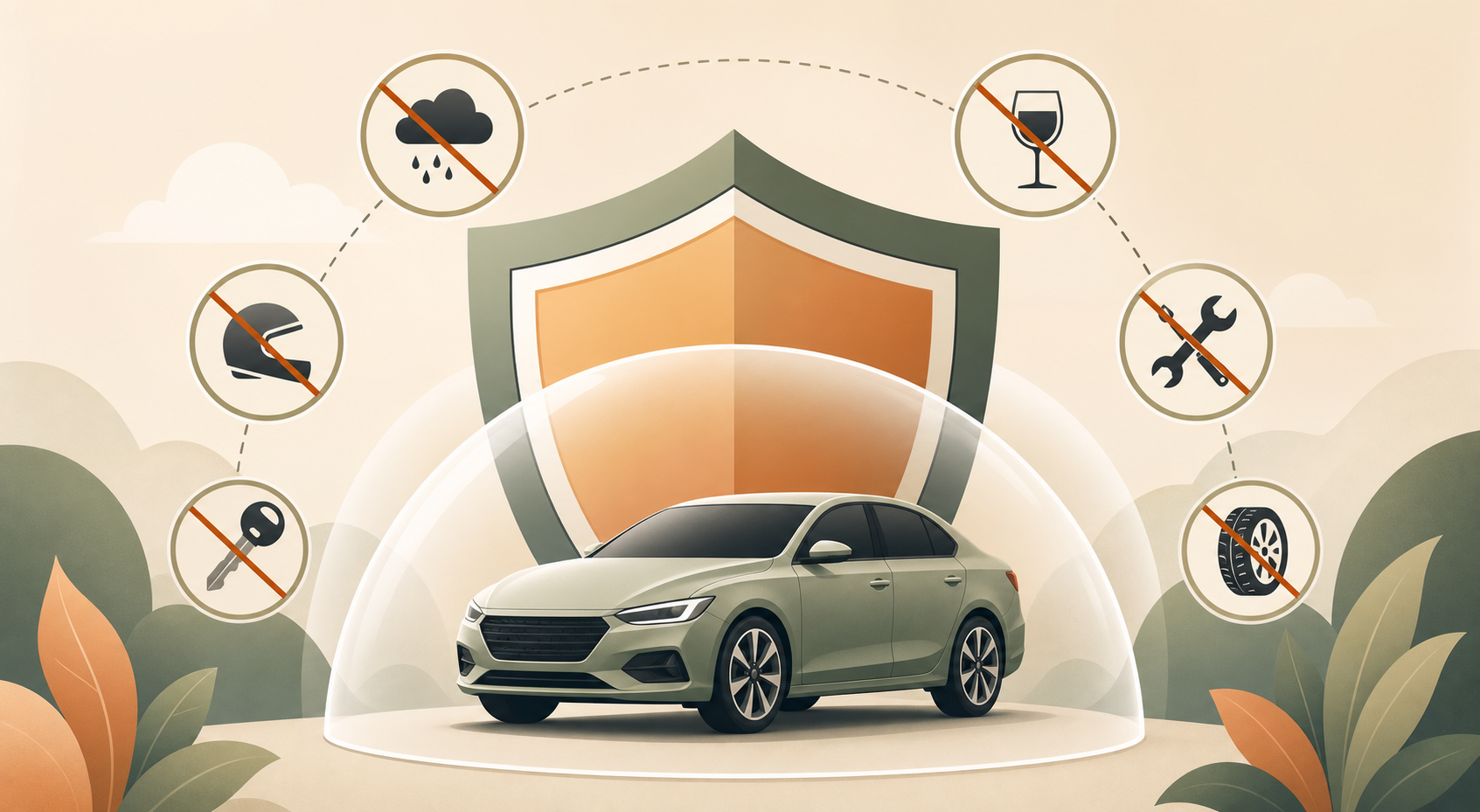
Many drivers focus on premiums, deductibles, and coverage limits when buying a policy, but the real test of coverage often comes down to what a contract does not pay for. That is where auto insurance exclusions become critically important. An exclusion is a situation, type of damage, vehicle use, or driver behavior that your insurer specifically does not cover. If you file a claim involving an excluded event, the insurer may deny payment even if you have what seems like strong protection on paper.
Understanding exclusions is essential because modern auto policies are highly detailed. Coverage may look broad in marketing materials, yet policy language can narrow protection significantly. This is especially true when a vehicle is used for business, when an unlisted driver is behind the wheel, or when damage occurs under unusual circumstances. Drivers who skip the fine print often discover limits only after an accident.
Insurance carriers rely on exclusions to price risk accurately and prevent moral hazard. From the insurer’s perspective, they help separate ordinary driving risks from unusually dangerous or unpredictable behavior. From the consumer’s perspective, exclusions can create costly surprises. Knowing where those gaps exist allows you to ask better questions, compare policies more effectively, and add endorsements where needed.
What Auto Insurance Exclusions Actually Mean in a Policy
In simple terms, exclusions are carve-outs in your contract. They identify losses the insurer will not cover under liability, collision, comprehensive, medical payments, or other sections of the policy. These exclusions are not always hidden, but they are often buried in long policy forms that many people never read in full.
Not every exclusion applies in every state or with every insurer. Auto insurance is regulated at the state level, so wording and enforceability can vary. Some exclusions are standard across much of the market, while others reflect insurer-specific underwriting rules. That is why two policies with similar prices can perform very differently at claim time.
It is also important to know that an exclusion is different from a policy limit. A limit caps how much your insurer will pay. An exclusion means there may be no payment at all for that type of loss. That distinction is often the difference between manageable out-of-pocket costs and major financial hardship.
Common Exclusions That Frequently Lead to Claim Denials
Some policy exclusions come up far more often than others. These are the areas drivers should review first before assuming they are fully protected.
Intentional Damage and Fraudulent Claims
Insurance is designed for accidents and unexpected losses, not deliberate acts. If a policyholder intentionally damages a vehicle, stages a crash, or misrepresents facts during a claim, the insurer will generally deny coverage. Fraud detection has become more sophisticated across the industry, with carriers using data analytics, repair patterns, and claim history reviews to identify suspicious activity.
Using a Personal Vehicle for Commercial Purposes
One of the most misunderstood auto insurance exclusions involves business use. A standard personal policy may not cover accidents that happen while delivering food, transporting goods, or carrying passengers for compensation. This issue has become more common with gig economy work. Drivers working for rideshare or delivery platforms often assume their personal insurance follows them at all times, but coverage can be limited or suspended depending on the app status and the insurer’s policy terms.
For example, a driver making deliveries during a lunch shift may be involved in a rear-end collision. If the policy excludes delivery use and the driver has not added a commercial or rideshare endorsement, the claim may be denied. That can affect both damage to the driver’s vehicle and liability for injuries to others.
Racing, Speed Contests, and Reckless Activity
Most insurers exclude losses arising from racing, timed events, or organized speed contests. Even informal street racing can trigger denial. Policies are built around normal road use, not deliberately high-risk activity. In some cases, reckless conduct that falls short of formal racing may still raise coverage issues, particularly if the claim investigation shows extreme speeding or dangerous stunts.
Wear and Tear or Mechanical Breakdown
Auto insurance is not a maintenance contract. Routine deterioration, engine failure, brake wear, electrical issues, and similar problems are generally excluded unless they result from a covered event. If your transmission fails because of age or neglect, that is usually your responsibility. If a covered collision causes mechanical damage, that may be different. This distinction matters because drivers often misunderstand comprehensive and collision coverage as broad vehicle protection when they are actually event-based protections.
Driving Without a Valid License
If the person operating the car is unlicensed, has a suspended license, or is otherwise not legally permitted to drive, coverage can become complicated. Some insurers may still provide limited protection in certain situations, but many policies contain strict language around lawful operation of the vehicle. If an excluded driver or unqualified operator causes the crash, a denial becomes much more likely.
Using the Vehicle Outside Geographic Limits
Some policies limit coverage based on territory. Many standard policies cover the United States, its territories, Puerto Rico, and Canada, but coverage may not extend beyond those areas. If you drive into another country or ship your car overseas, you may need a separate policy. Territorial auto insurance exclusions are especially relevant for snowbirds, long-term travelers, and expatriates.
How Exclusions Affect Different Parts of Your Coverage
Not all exclusions apply across the board. A policy may deny one kind of claim while still honoring another. Understanding where the exclusion sits in the contract is essential.
| Coverage Type | What It Typically Pays For | Common Exclusion Example | Potential Result |
|---|---|---|---|
| Liability | Injuries or property damage you cause to others | Excluded driver causes crash | Insurer may deny third-party damage payment |
| Collision | Damage to your vehicle after an impact | Vehicle used in racing event | No payment for repairs to your car |
| Comprehensive | Theft, vandalism, weather, animal impact | Mechanical breakdown mistaken for covered damage | Claim denied as maintenance-related |
| Medical Payments or PIP | Medical expenses for you and passengers | Injury during excluded commercial use | Medical claim may be limited or denied |
| Uninsured/Underinsured Motorist | Losses caused by drivers with little or no insurance | Policy territory exclusion applies abroad | No recovery under your policy |
This is why reviewing only the declarations page is not enough. The declarations page tells you what coverage you bought. The policy form tells you how that coverage can be restricted.
Named Driver and Household Driver Exclusions
Another major source of confusion involves who is actually covered to drive the insured car. Some insurers allow policyholders to specifically exclude a driver from the policy, often to reduce premiums when a high-risk household member lives at the same address. If that person drives the car and causes an accident, the insurer may decline coverage entirely. This is one of the most severe auto insurance exclusions because it can leave the owner personally responsible for injuries and property damage.
Even without a formal named-driver exclusion, failing to disclose regular household drivers can create problems. Insurers price policies based on who has access to the vehicle. If a teenage child, partner, or roommate uses the car frequently but is not listed, the insurer may investigate whether material information was withheld during underwriting. Depending on the facts and state law, that can lead to denied claims, premium adjustments, or even policy cancellation.
This area is particularly important in households with shared vehicles. A policyholder may assume that permissive use covers anyone who borrows the car occasionally. In reality, permissive use often applies only to infrequent drivers, and not every insurer defines that the same way.
Exclusions Related to Vehicle Condition and Modifications
Vehicle modifications can also create coverage gaps. Custom wheels, aftermarket audio systems, suspension lifts, performance upgrades, and body modifications may not be fully covered under a standard policy. Some insurers limit payment to factory equipment unless the additions were declared and insured separately.
Unsafe or illegal modifications can create even more serious issues. If a vehicle has been altered in a way that contributes to a crash, an insurer may closely examine whether policy conditions were breached. While not every modification leads to a denial, undeclared changes can affect valuation, underwriting eligibility, and claim handling.
Poor maintenance can produce similar problems. Bald tires, failed brakes, and ignored warning signs may not automatically void a policy, but if the claim centers on a preventable mechanical issue rather than a sudden covered event, payment may be denied. Insurers and investigators often distinguish between accidental loss and damage arising from neglect.
What Is Usually Excluded Under Comprehensive Coverage
Comprehensive coverage is often described as protection for “everything other than collision,” but that phrase is too broad. In reality, comprehensive protects against specific non-collision risks such as theft, fire, hail, vandalism, falling objects, and animal strikes. It does not turn your policy into a warranty or service plan.
Common misunderstandings include believing comprehensive will pay for tire wear, battery failure, engine seizure, rust, mold from neglect, or broken parts caused by age. These situations are usually outside the intended purpose of the coverage. Drivers should pay close attention to policy language defining direct and accidental loss. That wording often determines whether an event qualifies.
For example, if a flood enters your vehicle during a storm, that may be a covered comprehensive loss. If a long-standing seal problem allows moisture to build up over time and damages the interior, the insurer may classify that as maintenance-related deterioration instead of a sudden insured event.
State Laws, Lender Rules, and Why Exclusions Are Not Always Uniform
Auto insurance exclusions are shaped not just by insurer preference but also by state regulations, court decisions, and policy filing rules. Some states limit the enforceability of certain exclusions in order to protect injured third parties. Others allow broader contract freedom. As a result, a denial that is valid in one state might be challenged successfully in another.
Lenders and leasing companies add another layer. If you finance or lease a vehicle, your lender may require collision and comprehensive coverage, but that does not mean every type of damage is covered. Loan or lease requirements focus on carrying certain coverage types, not eliminating exclusions within those coverages. Gap insurance can help in total-loss situations, but it also has terms and conditions that should be reviewed carefully.
Because of these variations, drivers should avoid relying on generic advice from friends or internet forums. The exact wording of your policy and the laws in your state are what matter most.
How to Spot Problem Areas Before You Need to File a Claim
The best time to address exclusions is before an accident happens. A short annual review can prevent expensive surprises later. Ask your insurer or agent direct questions and request written confirmation if your use of the vehicle has changed.
- Confirm whether your policy covers rideshare, delivery, or other business-related driving.
- Review all household drivers and make sure regular operators are properly disclosed.
- Ask how aftermarket equipment and custom parts are valued and insured.
- Verify territorial limits if you plan to drive into Canada, Mexico, or beyond.
- Check whether any named-driver or permissive-use restrictions apply.
- Read exclusions under each coverage section, not just the summary page.
This review matters even more after life changes. Moving, adding a teen driver, changing jobs, starting gig work, or modifying your vehicle can all affect the policy you originally purchased.
What to Do If a Claim Is Denied Based on an Exclusion
A denial is not always the end of the road, but it does require careful action. First, request the denial letter and identify the specific policy language the insurer is relying on. A vague explanation is not enough. You need to know whether the issue involves an exclusion, a misrepresentation allegation, late notice, or some other contractual defense.
Next, compare the denial to your actual policy documents, including endorsements. Sometimes coverage exists through an added endorsement that was overlooked in early claims handling. Documentation also matters. Photos, repair records, proof of vehicle use, app logs for gig work, or evidence that a driver had permission can all affect the outcome.
If the situation remains unclear, escalate the matter through the insurer’s internal appeals or complaint channels. You can also contact your state insurance department. In larger disputes involving injuries, total losses, or major liability exposure, legal advice may be appropriate. Courts often scrutinize exclusion language closely, especially if it is ambiguous or conflicts with state public policy.
Smart Ways to Reduce Exposure to Coverage Gaps
While no policy covers every scenario, drivers can take practical steps to reduce the impact of auto insurance exclusions.
- Match the policy to actual vehicle use. If you earn money with your car, add the proper endorsement or commercial coverage.
- Disclose all regular drivers honestly. Saving money by leaving someone off the policy can backfire badly.
- Document upgrades and ask for added protection for custom equipment.
- Maintain the vehicle consistently so preventable mechanical issues do not become disputed losses.
- Review your policy each renewal, especially after moving, changing jobs, or buying a new vehicle.
These habits will not eliminate every risk, but they can make your coverage far more dependable when you actually need it.
Why Reading the Fine Print Can Save You Thousands
The most expensive insurance mistake is assuming you are covered without verifying the details. Auto insurance exclusions are not rare technicalities. They are a core part of how policies work, how premiums are priced, and how claims are evaluated. A driver who understands them is in a much stronger position to choose the right insurer, ask informed questions, and avoid denied claims.
In today’s market, policy complexity is increasing as vehicles become more expensive to repair and personal driving habits become more varied. Delivery driving, shared cars, advanced modifications, and cross-border travel all create situations where exclusions can matter. Reviewing your policy now is far easier than fighting over coverage after a loss.
If there is one takeaway every driver should remember, it is this: auto insurance exclusions define the edges of your protection. Knowing those edges is just as important as knowing your premium. When you understand what is left out, you can make smarter coverage decisions, close critical gaps, and protect your finances with far more confidence.