Filed under Auto Insurance on
Las Vegas Commercial Auto Insurance 8275 S Eastern Ave Arthur
Why Commercial Auto Coverage Matters for Las Vegas Businesses
Commercial vehicles keep many Las Vegas companies moving. From contractors driving between jobsites to delivery teams serving customers across the valley, business-owned and business-used vehicles face real exposure every day. A personal auto policy is often not enough when a vehicle is used for work, carries tools or inventory, or transports employees. That is why business owners searching for las vegas commercial auto insurance 8275 s eastern ave arthur are usually looking for more than a basic quote. They need protection that matches how their operation actually runs.
Las Vegas presents a unique driving environment. The city combines heavy tourism traffic, fast-growing residential areas, major freeway corridors, and frequent commercial activity. That mix can increase the likelihood of accidents, claims, and liability concerns. For many companies, one serious collision can disrupt operations, damage reputation, and create costly legal exposure. Strong commercial auto insurance helps reduce that risk with tailored liability, vehicle damage, and optional protections.
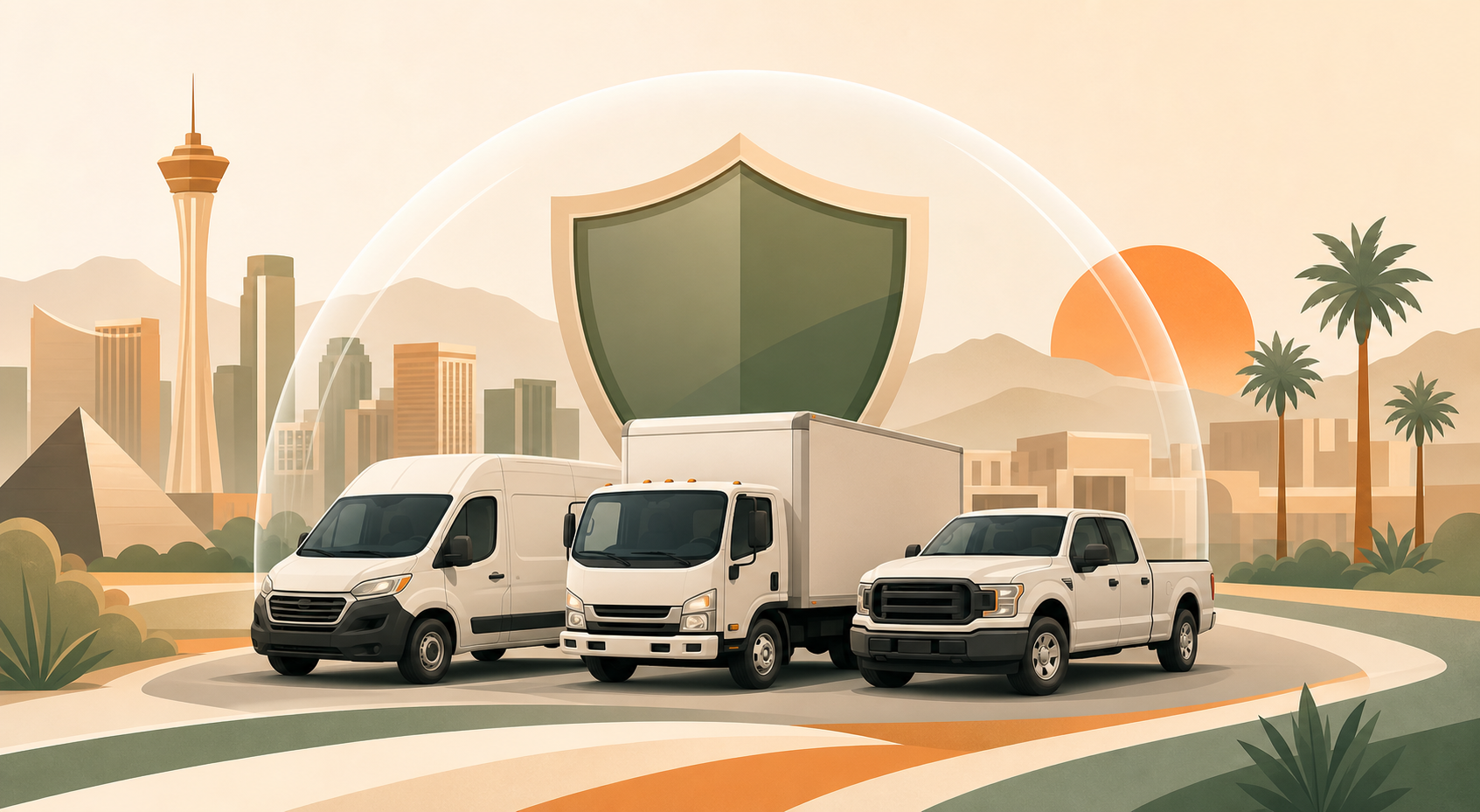
Businesses that rely on cars, vans, pickup trucks, box trucks, or specialty vehicles should review coverage carefully. Whether a company has one work truck or an entire fleet, the right policy can support business continuity and protect cash flow after an incident.
What “Commercial Auto Insurance” Typically Includes
Commercial auto insurance is designed for vehicles used in connection with business activities. The policy structure can vary, but most plans are built around a core set of coverages that address both legal liability and physical damage. Companies exploring las vegas commercial auto insurance 8275 s eastern ave arthur should understand what these components do before comparing options.
Liability Protection for Bodily Injury and Property Damage
This is the foundation of most commercial auto policies. If a driver causes an accident while operating a covered business vehicle, liability coverage may help pay for injuries to others, damage to another vehicle, repairs to structures, and legal defense costs up to policy limits. In a high-traffic metro area like Las Vegas, carrying adequate liability limits is especially important.
Collision and Comprehensive Coverage
Collision coverage helps pay for damage to the insured vehicle after an accident, regardless of fault in many situations. Comprehensive coverage helps with losses from theft, vandalism, weather damage, fire, and some non-collision events. For businesses with financed vehicles or valuable service trucks, these coverages can be essential.
Uninsured and Underinsured Motorist Coverage
Not every driver on the road carries sufficient insurance. This coverage can help protect your business vehicle occupants when another party has little or no insurance. In a busy urban driving environment, this added layer can be a practical safeguard.
Medical Payments and Personal Injury Related Options
Depending on policy design and state-specific rules, businesses may also add protections that help cover medical expenses for drivers and passengers after a covered incident. These features can support faster recovery and reduce out-of-pocket costs.
Businesses That Commonly Need Commercial Auto Insurance in Las Vegas
Many owners assume commercial auto insurance applies only to trucking companies. In reality, a wide range of industries need it. Any business that owns vehicles, leases them, or regularly uses them for company operations should review its risk profile.
- General contractors, electricians, plumbers, and HVAC companies
- Delivery services, couriers, and food distribution businesses
- Real estate teams and property management companies
- Landscaping, janitorial, and maintenance providers
- Medical transport, home health, and senior care services
- Retail businesses with local delivery operations
- Consultants or sales organizations with company cars
If employees drive to client sites, transport equipment, or use a vehicle branded with the company name, the exposure is often more commercial than personal. That is one reason why businesses often look up las vegas commercial auto insurance 8275 s eastern ave arthur when trying to secure compliant and practical protection.
Key Risks Facing Commercial Drivers in the Las Vegas Area
Las Vegas road exposure is shaped by a combination of local growth and visitor volume. Businesses should account for these realities when selecting coverage. Accidents can happen in tourist corridors, suburban intersections, warehouse districts, and on major routes like I-15, US-95, and the 215 Beltway. A policy should reflect where, when, and how vehicles are used.
Congestion is a major concern. Commercial drivers may spend long hours in stop-and-go traffic or make repeated short trips throughout the day. That increases the chance of rear-end collisions, parking lot incidents, and distracted driving claims. Heat is another factor. Extreme temperatures can contribute to tire issues, battery strain, and roadside breakdowns, especially for service fleets operating through the summer.
There is also a liability dimension tied to visibility and branding. A work vehicle displaying a company logo can draw immediate public attention after an accident. Even a relatively minor incident can lead to online reviews, complaints, or legal action. Good commercial auto coverage helps businesses respond quickly and professionally.
How Policy Costs Are Typically Determined
Rates for las vegas commercial auto insurance 8275 s eastern ave arthur are influenced by several underwriting factors. Insurers assess both the company itself and the vehicles being insured. Price should never be the only factor, but understanding what drives premiums can help business owners improve both affordability and insurability.
Vehicle Type and Value
A light-duty sedan used by a sales rep is rated differently from a cargo van filled with tools or a heavy truck carrying materials. Newer vehicles with advanced safety technology may have some underwriting advantages, but repair costs can also be higher.
Driver History and Experience
Clean driving records usually help. Drivers with accidents, moving violations, DUIs, or limited commercial driving experience may increase premiums. Businesses should also consider regular motor vehicle record checks and driver screening programs.
Business Operations and Radius of Use
Insurers want to know how vehicles are used. Local service routes, interstate deliveries, daily mileage, and jobsite transportation all affect risk. The number of employees driving company vehicles also matters.
Coverage Limits and Deductibles
Higher limits provide broader protection but generally cost more. Deductibles can influence premium as well. The right balance depends on the company’s financial tolerance for out-of-pocket losses.
| Rating Factor | Why It Matters | Potential Impact on Premium |
|---|---|---|
| Driver records | Past violations and claims suggest future risk level | Clean records may lower cost, poor records may raise it |
| Vehicle type | Size, weight, cargo use, and repair cost affect exposure | Heavier or specialized vehicles often cost more to insure |
| Usage pattern | More miles and denser routes increase accident probability | High-frequency commercial use can raise rates |
| Coverage limits | Higher liability and added options provide broader protection | More protection usually means higher premium |
| Claims history | Prior losses may indicate unresolved operational risks | Frequent claims can lead to higher pricing |
Coverage Options That Can Strengthen a Business Policy
A standard policy may not address every operational need. Companies evaluating las vegas commercial auto insurance 8275 s eastern ave arthur often benefit from looking at endorsements and optional protections that align with their business model.
Hired and Non-Owned Auto Liability
If employees use rented vehicles or their own cars for business errands, the company could still face liability after an accident. Hired and non-owned auto coverage can help address those exposures. This is especially relevant for firms that rely on employee travel but do not maintain a large owned fleet.
Roadside Assistance and Towing
For service-based businesses, downtime can mean missed appointments and lost revenue. Roadside assistance can be valuable for businesses that depend on fast response times.
Rental Reimbursement and Downtime Protection
When a covered vehicle is out of service due to a claim, temporary transportation can keep operations moving. This is important for companies with limited spare vehicles.
Tools, Equipment, and Cargo Considerations
Commercial auto policies do not always fully cover everything carried inside a vehicle. Contractors and mobile service providers may need inland marine, equipment, or cargo-related coverage in addition to their auto policy. A business should review all property exposures rather than assuming the vehicle policy covers every item onboard.
How to Choose the Right Policy for Your Operation
The best commercial auto insurance policy is not simply the cheapest one. It is the one that reflects real-world business use, satisfies contractual or legal obligations, and offers enough financial protection if something goes wrong. When reviewing las vegas commercial auto insurance 8275 s eastern ave arthur, decision-makers should approach the process strategically.
- Identify every vehicle used for business, including owned, leased, rented, and employee-owned vehicles.
- Map out who drives, how often they drive, and whether they transport tools, passengers, or materials.
- Review contracts with clients or vendors that may require specific liability limits.
- Compare policy limits, exclusions, deductibles, and endorsements, not just premium.
- Ask how claims are handled and whether risk management support is available.
It is also wise to review policies annually. Business growth can create coverage gaps. Adding drivers, changing service areas, or upgrading vehicles may require immediate policy updates.
Why Local Knowledge Can Improve Coverage Decisions
Commercial auto insurance is not one-size-fits-all, and local context matters. Businesses in the Las Vegas market may benefit from working with professionals who understand regional traffic patterns, common industry needs, and the insurance expectations of local clients and municipalities. Searches for las vegas commercial auto insurance 8275 s eastern ave arthur often reflect a desire for nearby, accessible expertise tied to actual business conditions in the area.
A local-focused approach can help with more than quoting. It can assist with certificate requests, fleet updates, driver changes, and claims guidance. For companies working in construction, hospitality support, retail delivery, or property services, practical speed and accuracy matter just as much as price.
There is also value in discussing future growth. A business opening a second location, adding more vans, or taking on larger contracts may need higher limits or broader endorsements than it needed a year ago. Insurance should scale with the operation.
Common Mistakes Businesses Make With Commercial Auto Insurance
Even well-run companies can overlook important details. Some errors only become obvious after a claim, when changing a policy is no longer possible. Reviewing these issues can help businesses make smarter coverage decisions.
- Using a personal auto policy for business driving that should be classified as commercial
- Failing to list all regular drivers or not screening new hires adequately
- Choosing minimum liability limits that may not protect business assets after a serious loss
- Assuming tools, equipment, or transported goods are fully covered under the auto policy
- Forgetting to update coverage after buying, selling, or replacing vehicles
These problems can lead to denied claims, insufficient recovery, or expensive out-of-pocket costs. Businesses researching las vegas commercial auto insurance 8275 s eastern ave arthur should view the process as part compliance, part risk management, and part operational planning.
Industry Trends Shaping Commercial Auto Coverage
The commercial auto insurance market has changed notably in recent years. Insurers are paying closer attention to loss trends, repair costs, vehicle technology, and litigation risk. Advanced driver assistance systems can improve safety in some cases, but they may also increase repair expenses after even minor collisions. That affects claims severity and premium levels across the market.
Another trend is the rise of telematics. Some businesses use vehicle tracking and driver behavior monitoring to improve route efficiency and reduce unsafe driving habits. Insurers may view strong fleet management practices favorably, especially when they demonstrate a commitment to safety. Businesses with multiple vehicles may want to ask whether telematics, dash cameras, or formal driver training could support better underwriting results over time.
Claims inflation remains a factor as well. Labor costs, parts costs, medical expenses, and legal settlements can all push claim values upward. This makes adequate liability limits more important than ever. A policy that looked sufficient years ago may now be too low for current risk conditions.
Steps to Build a Safer and More Insurable Fleet
Insurance works best when paired with active risk control. Businesses can often reduce claims and strengthen long-term insurability by implementing practical fleet safety measures. This is especially useful for companies comparing options related to las vegas commercial auto insurance 8275 s eastern ave arthur and looking beyond premium alone.
Driver Selection and Training
Establish clear hiring standards for anyone who will operate a business vehicle. Review motor vehicle records, verify licensing, and set expectations for safe driving. Ongoing training should cover distracted driving, backing procedures, speed management, and accident reporting protocols.
Vehicle Maintenance Programs
Routine inspections and preventive maintenance can reduce the chance of breakdowns and certain accident types. Tire condition, brakes, lights, fluid levels, and cooling systems are particularly important in the Las Vegas climate.
Written Fleet Use Policies
Businesses should define rules for personal use, mobile phone use, seat belts, vehicle security, and incident reporting. Written policies create consistency and show insurers that the business treats fleet safety seriously.
What to Have Ready When Requesting a Quote
Getting an accurate quote is easier when a business provides clear and complete information. For owners searching las vegas commercial auto insurance 8275 s eastern ave arthur, preparation can speed up the process and improve quote quality.
Insurers commonly request a vehicle schedule with make, model, VIN, year, and estimated value. They will also need driver information, including license details and prior driving history. Businesses may be asked about annual mileage, operating radius, cargo type, garaging location, and whether vehicles cross state lines. Prior loss runs, current declarations pages, and business details such as years in operation and industry class are also often relevant.
Accurate data matters. If key facts are omitted or estimated poorly, the quoted premium may not reflect the true risk, and policy changes could be needed later. A complete submission helps avoid surprises.
Making Sense of Value Beyond the Premium
Price matters, but value matters more. The most affordable policy can become the most expensive if it leaves a business underinsured after a major accident. When comparing las vegas commercial auto insurance 8275 s eastern ave arthur, businesses should consider claim service, financial strength of the insurer, coverage flexibility, and responsiveness to endorsements or certificates.
A strong policy supports business continuity. It helps a contractor keep crews moving after a vehicle loss. It helps a delivery business continue operating after a collision. It helps a growing company meet contract requirements with confidence. In that sense, commercial auto insurance is not just a regulatory requirement. It is a tool that protects revenue, reputation, and long-term stability.
For Las Vegas businesses that depend on vehicles every day, careful coverage selection is a smart operational decision. The right policy can reduce uncertainty, support compliance, and create a more resilient foundation for growth.