Filed under Auto Insurance on
Texas State Minimum Coverage Auto Insurance Guide
What Texas Requires Drivers to Carry
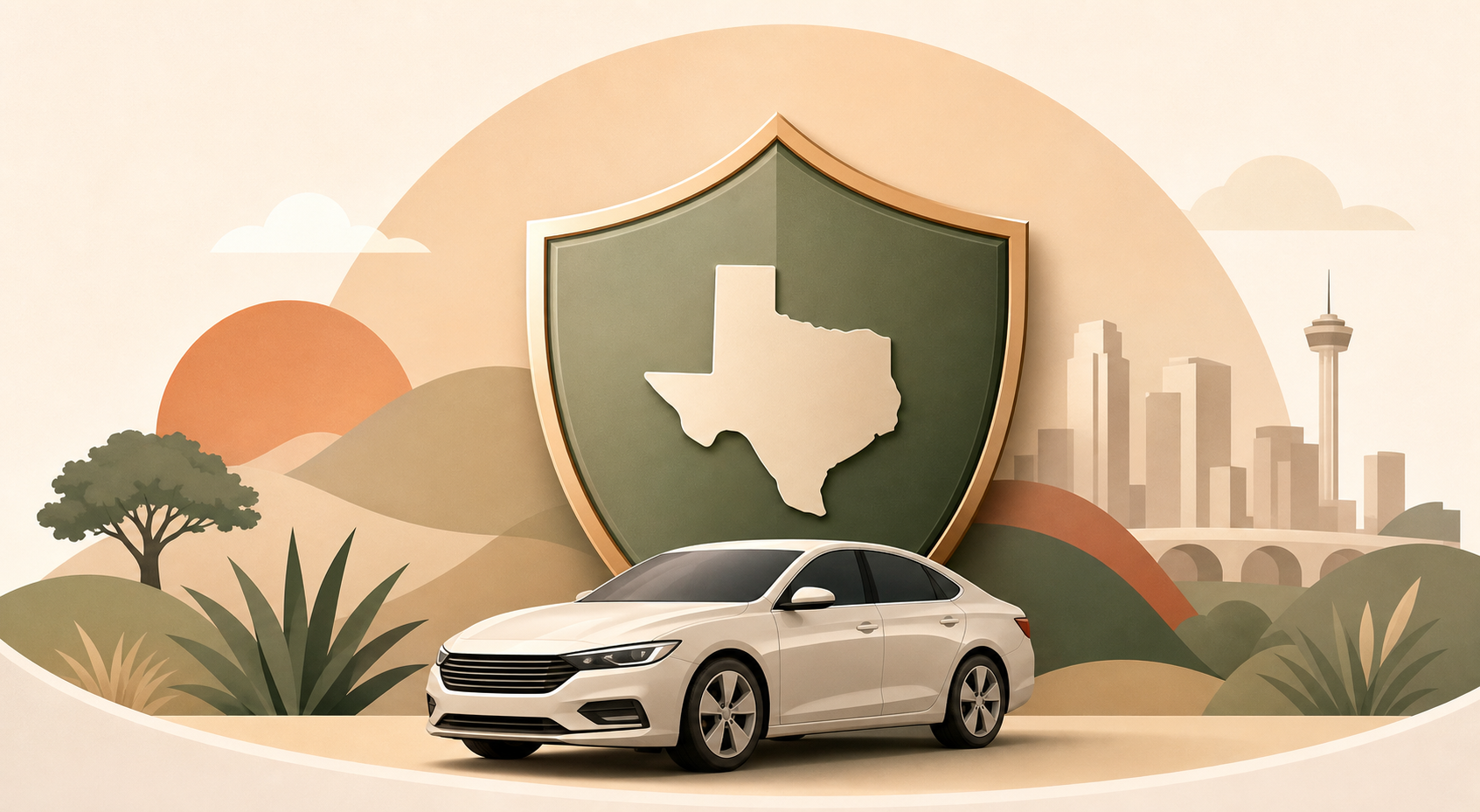
Texas law requires every driver to show financial responsibility, and for most motorists that means buying liability auto insurance. When people refer to texas state minimum coverage auto insurance, they are usually talking about the minimum liability limits required to legally drive in the state. These limits are commonly written as 30/60/25.
That shorthand means your policy must include up to $30,000 for bodily injury liability per person, up to $60,000 total bodily injury liability per accident, and up to $25,000 for property damage liability per accident. This coverage helps pay for injuries or damage you cause to others in an at-fault accident. It does not pay for your own vehicle repairs, your own medical bills, or losses that exceed your policy limits.
For many drivers, texas state minimum coverage auto insurance is the lowest-cost way to meet legal requirements. It can be a practical option for older vehicles with low market value or for drivers working within a strict monthly budget. Still, minimum coverage should be understood as a legal baseline, not necessarily a strong layer of financial protection.
Insurance regulators and consumer advocates often caution that liability claims have become more expensive over time due to higher repair costs, advanced vehicle technology, and rising medical expenses. That means the minimum required limits can be exhausted faster than many drivers expect.
Breaking Down the 30/60/25 Liability Limits
Understanding what each part of the requirement covers can help you decide whether the minimum is enough for your situation. Liability insurance is designed to protect other people when you are responsible for an accident.
Bodily Injury Liability Per Person
The first number, $30,000, is the maximum your insurer will pay for one injured person in an accident you cause. If another driver, passenger, or pedestrian suffers injuries and their losses exceed that amount, you may be personally responsible for the remainder.
Bodily Injury Liability Per Accident
The second number, $60,000, is the total available for all bodily injury claims from a single accident. If several people are injured, that pool of money can run out quickly. A two-car crash with multiple passengers can easily generate medical costs beyond the state minimum.
Property Damage Liability
The final number, $25,000, covers damage you cause to another person’s property, usually their vehicle. It can also apply to fences, buildings, guardrails, signs, or other structures. With today’s vehicle prices and sophisticated sensors, cameras, and bumpers, even moderate collisions can produce repair bills above $25,000.
| Coverage Type | Texas Minimum Limit | What It Helps Pay For | Key Limitation |
|---|---|---|---|
| Bodily Injury Liability | $30,000 per person | Injuries to one other person if you cause an accident | Does not cover your own injuries |
| Bodily Injury Liability | $60,000 per accident | Total injuries to all others in one accident | Can be insufficient in multi-injury crashes |
| Property Damage Liability | $25,000 per accident | Damage to another vehicle or property | May not cover newer vehicle repair or replacement costs |
What Minimum Coverage Does Not Include
A common misunderstanding is that texas state minimum coverage auto insurance protects both you and the other driver. In reality, the legal minimum in Texas is focused on liability to others. Unless you add more coverage options, there are several important gaps.
- Collision coverage for damage to your own car after an accident
- Comprehensive coverage for theft, hail, fire, vandalism, or animal strikes
- Medical payments or personal injury protection for your own injuries
- Uninsured or underinsured motorist coverage if another driver lacks enough insurance
- Rental reimbursement, roadside assistance, and other optional protections
These exclusions matter because Texas drivers face real-world risks beyond basic liability claims. Hailstorms are common in many parts of the state. Urban traffic in cities like Houston, Dallas, Austin, and San Antonio increases accident exposure. And uninsured or underinsured drivers remain an issue nationwide, making optional protective coverage worth evaluating carefully.
When the State Minimum May Be Enough
There are situations where carrying only texas state minimum coverage auto insurance can be a reasonable decision. A driver with an older car worth only a few thousand dollars may not want to pay for collision or comprehensive coverage. Someone who drives infrequently, has no loan or lease, and can afford to replace their vehicle out of pocket may also lean toward minimum liability.
This approach can also appeal to drivers who need to lower premiums quickly to avoid a lapse in coverage. Even basic insurance is far better than driving uninsured, which can trigger fines, license consequences, higher future premiums, and substantial out-of-pocket exposure after an accident.
That said, the decision should be tied to your assets, income, driving habits, and risk tolerance. If you have savings, own a home, or have wages that could be targeted in a lawsuit, the minimum may leave too much at stake.
Why Many Texas Drivers Choose Higher Limits
While the minimum satisfies legal requirements, many insurance professionals recommend buying more liability protection when possible. The reason is simple: accident costs can exceed 30/60/25 quickly.
Vehicle repair inflation has changed the equation. Even a seemingly minor rear-end collision involving a newer SUV or electric vehicle can lead to expensive parts replacement, calibration of safety systems, and labor-intensive repairs. Medical costs have also climbed, especially when emergency room care, imaging, specialist visits, rehabilitation, or lost wages are involved.
Because of these trends, increasing liability limits is often one of the most cost-effective upgrades on an auto policy. Moving from state minimums to higher limits may not raise premiums as dramatically as many people assume, especially for drivers with clean records.
If you are comparing options, ask for quotes at multiple liability levels. In many cases, the price difference between basic texas state minimum coverage auto insurance and a more protective policy can be smaller than the financial risk you would face after a serious crash.
Optional Coverages That Deserve Attention
Texas insurers usually offer several add-ons that can make a policy much more protective. Some are especially relevant because of the driving environment, weather patterns, and insurance risk profile in the state.
Personal Injury Protection
Texas insurers are generally required to offer personal injury protection, often called PIP, though you can reject it in writing. PIP can help cover medical bills, lost income, and certain other related costs after an accident, regardless of fault. For many households, this coverage adds practical value at a relatively modest price.
Uninsured and Underinsured Motorist Coverage
This coverage helps if another driver causes an accident and either has no insurance or not enough insurance to fully pay your losses. Since not every driver carries adequate protection, this option can be an important safeguard.
Comprehensive Coverage for Weather and Theft Risks
Comprehensive coverage is especially relevant in Texas because it can help with hail damage, flood-related losses, falling objects, fire, vandalism, and theft. Drivers in storm-prone regions often find this protection worthwhile, particularly if their vehicle still has meaningful value.
How Lenders and Leases Change the Coverage Rules
If your car is financed or leased, the legal minimum is usually not enough. Lenders and leasing companies almost always require collision and comprehensive coverage to protect the vehicle that secures the loan or lease. They may also impose maximum deductible limits.
In those cases, texas state minimum coverage auto insurance is not the full picture. You still need to satisfy the state’s liability law, but you must also meet the contract terms set by the lender. Failing to do so can lead to force-placed insurance, which is often far more expensive and offers less flexibility than a policy you choose yourself.
What Minimum Coverage Typically Costs in Texas
The price of minimum liability insurance varies widely. There is no single statewide rate because insurers calculate premiums based on many personal and regional factors. Your age, ZIP code, driving history, credit-based insurance score where permitted, vehicle type, annual mileage, marital status, and prior insurance history can all affect the cost.
Urban areas often see higher premiums due to denser traffic, more claims activity, and higher repair costs. Young drivers and drivers with tickets, accidents, or DUI-related issues usually pay more. On the other hand, mature drivers with clean records may find texas state minimum coverage auto insurance relatively affordable compared with broader policy packages.
Shopping around matters. Insurers use different rating models, so one carrier may view your profile much more favorably than another. Comparing at least three quotes is a smart starting point.
Smart Ways to Lower Your Premium Without Sacrificing Protection
Many drivers focus only on buying the cheapest possible policy, but there are better ways to control cost while keeping meaningful coverage. The goal should be value, not just the lowest premium.
- Compare quotes from multiple insurers at the same coverage levels so the price differences are meaningful.
- Ask about bundling auto with renters, condo, or homeowners insurance.
- Maintain continuous coverage, since lapses can raise future premiums.
- Choose a vehicle with lower repair and theft risk if you are shopping for a car.
- Review discounts for safe driving, telematics, paperless billing, automatic payments, good students, or defensive driving courses.
- Consider raising deductibles on collision and comprehensive if you carry those coverages and can afford more out of pocket after a claim.
These strategies can often make higher liability limits more affordable, reducing the need to rely solely on texas state minimum coverage auto insurance.
Penalties for Driving Without Insurance in Texas
Choosing not to carry insurance is very risky. Texas takes uninsured driving seriously, and the consequences can be expensive even before considering accident-related liability. Drivers may face fines, court costs, and higher insurance premiums later. Repeat offenses can bring steeper penalties and additional administrative problems.
If you cause an accident without insurance, you could be held personally responsible for property damage, medical bills, legal defense expenses, and court judgments. That kind of financial exposure can be devastating. For this reason, even drivers who can only afford basic texas state minimum coverage auto insurance are in a far better position than drivers who go without any policy at all.
How to Decide if Minimum Coverage Fits Your Situation
The right policy depends on more than legal compliance. It depends on what you need to protect. Before choosing minimum limits, think through your financial exposure and practical day-to-day risk.
Ask yourself a few key questions. How much is your vehicle worth? Could you afford to repair or replace it yourself? Do you drive long distances in heavy traffic? Do you have savings, a home, or income that could be vulnerable in a lawsuit? Would a major accident create hardship if another driver’s losses exceeded your liability limits?
If your answer to several of these questions suggests significant exposure, then the state minimum may be too low. If your car has little value, you rarely drive, and your budget is extremely tight, then minimum coverage may serve as a temporary or practical solution while still keeping you legally insured.
Common Mistakes Texas Drivers Make When Buying Basic Insurance
One frequent mistake is assuming all low-cost policies offer the same value. Some insurers differ significantly in claims service, billing flexibility, digital tools, and customer support. Price matters, but so does the company’s reputation for handling claims fairly and efficiently.
Another mistake is focusing only on the monthly premium. A policy with very low liability limits may save money upfront but expose you to larger losses later. Drivers also sometimes decline optional coverages without understanding what they are giving up, especially uninsured motorist coverage and PIP.
A third issue is forgetting to update coverage after life changes. A new vehicle, a move to a different city, a teen driver in the household, or a longer commute can all affect whether texas state minimum coverage auto insurance is still appropriate.
Choosing the Right Policy With Confidence
Texas minimum liability insurance exists to ensure drivers can pay at least some of the damage they may cause on the road. It is an important legal standard, but it is only a starting point. For some motorists, texas state minimum coverage auto insurance offers a workable and affordable path to staying compliant. For others, it leaves too many financial gaps.
The smartest approach is to compare more than price alone. Review liability limits, optional protections, deductible choices, insurer reputation, and your own ability to handle costs after an accident. A policy should match your budget, but it should also reflect the real cost of modern repairs and medical care.
By understanding exactly what texas state minimum coverage auto insurance includes and what it leaves out, you can make a more informed decision and avoid surprises when you need your policy most. In many cases, a modest increase in coverage can deliver significantly better peace of mind on Texas roads.