Filed under Auto Insurance on
Why Is Michigan Auto Insurance So High Explained
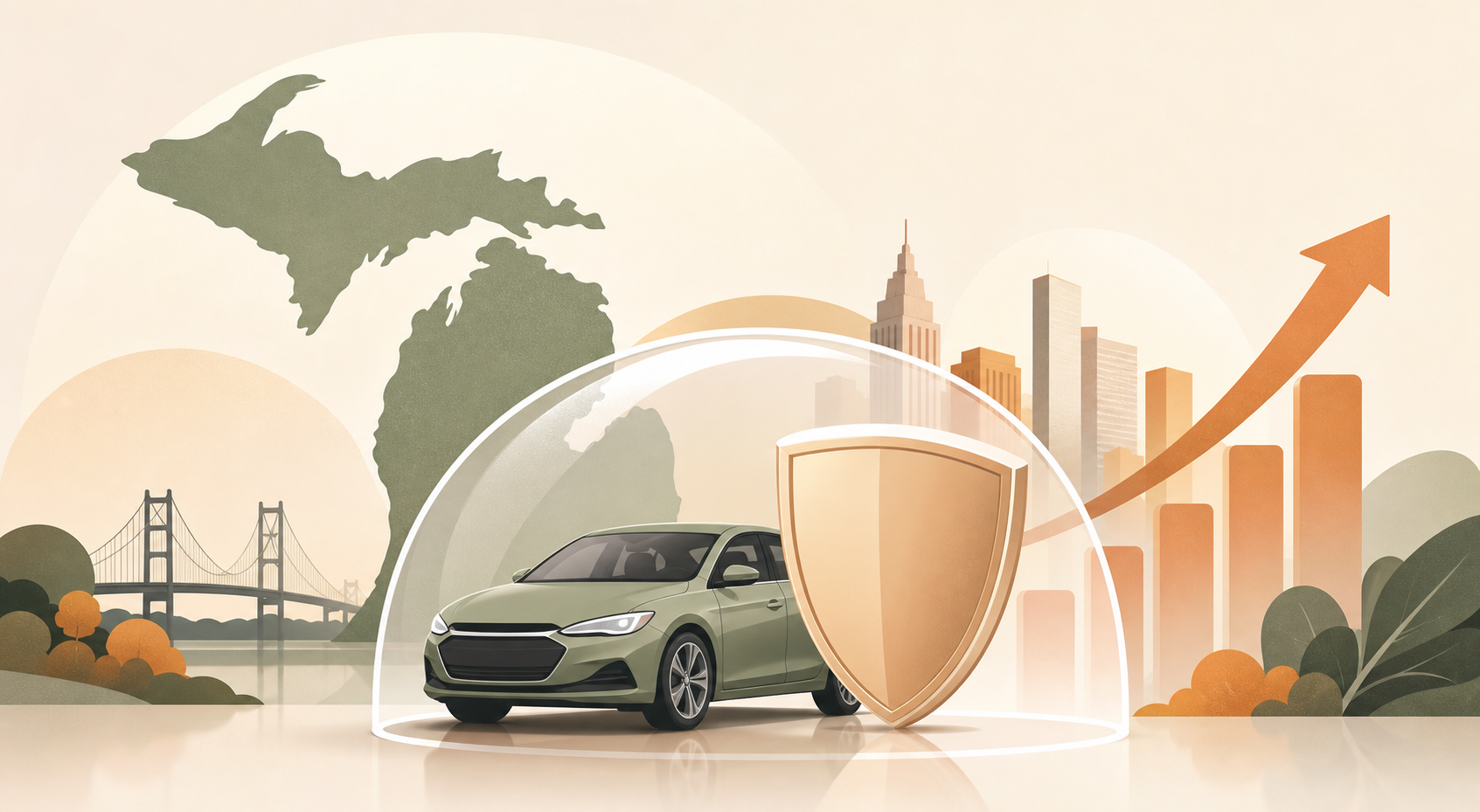
Michigan Drivers Face Some of the Highest Premiums in the Country
If you have ever wondered why is michigan auto insurance so high, you are not alone. Michigan has long ranked among the most expensive states for car insurance, and the reasons go far beyond simple geography. Premiums are shaped by a mix of legal rules, medical claim costs, repair expenses, urban traffic patterns, fraud concerns, and insurer risk models.
For years, Michigan stood out because of its unique no-fault insurance system, which required unusually broad personal injury protection benefits. Even after major reforms, many drivers still pay more than they expect. The result is a market where insurance can feel disproportionately expensive, especially for households with multiple vehicles, young drivers, or limited driving history.
Understanding why is michigan auto insurance so high requires looking at the full picture. It is not just about one law or one insurer. It is the combined effect of statewide policy, local risk, healthcare costs, litigation trends, and the economics of repairing modern vehicles.
Michigan’s No-Fault Legacy Still Shapes Today’s Rates
One of the biggest answers to why is michigan auto insurance so high lies in Michigan’s no-fault framework. Under no-fault insurance, drivers typically turn to their own insurer for medical costs and certain losses after an accident, regardless of who caused the crash. Michigan historically offered extremely generous lifetime medical benefits for crash-related injuries, which made it very different from most other states.
Those broad benefits created a system where catastrophic injury claims could cost insurers millions of dollars over time. Long-term rehabilitation, attendant care, home modifications, and specialized treatment all added significant financial exposure. Insurers price policies based on expected future claims, so these large potential payouts pushed premiums upward for many drivers.
Reforms introduced in recent years gave motorists more personal injury protection options, which helped reduce costs for some households. Still, the legacy of the old structure continues to influence rates. Claims history, ongoing medical obligations, and the general cost profile of the state do not disappear overnight.
Even with reform, insurers still evaluate Michigan as a state with substantial claim severity. That matters because severity, not just frequency, is one of the most powerful pricing factors in auto insurance.
How Personal Injury Protection Affected Premiums
Personal injury protection, often called PIP, has been central to the pricing issue. In many states, medical coverage in auto insurance is more limited. In Michigan, expansive medical obligations became a defining feature. This meant insurers had to reserve much more money per policy to prepare for worst-case injury scenarios.
When serious crashes happen, costs can escalate quickly. Hospital care, surgeries, rehabilitation, in-home care, and lost wages can stretch over years. Because insurance rates reflect projected risk across all insured drivers, these high-cost claims were spread through the premium base.
Medical Costs and Catastrophic Claims Drive Claim Severity
Another major reason why is michigan auto insurance so high is the cost of medical care itself. Insurance prices are not only based on accident frequency. They are also based on how expensive each claim becomes after a crash. In Michigan, severe injury claims have historically been especially costly because treatment expenses, long-term care, and legal complexity can all be substantial.
Healthcare inflation plays a major role. As hospital charges, specialist fees, physical therapy, prescription costs, and long-term rehabilitation expenses rise, insurance carriers must account for that inflation in rate filings. This is especially important in no-fault environments, where insurers may bear broad responsibility for paying injury-related costs.
Catastrophic injury claims are relatively rare compared with minor fender benders, but they heavily influence premiums because of their financial magnitude. A small number of very large claims can significantly alter the loss experience in a state. That is why Michigan’s rate environment has remained elevated even when reforms were designed to create relief.
Urban Density, Traffic, and Theft Raise the Risk Profile
Location also matters. When people ask why is michigan auto insurance so high, the answer often depends on where they live. Urban areas, especially densely populated regions, usually see higher premiums because they have more accidents, more claims, more congestion, and often more theft or vandalism.
Detroit has frequently been cited as one of the costliest cities in America for auto insurance. Heavier traffic increases the chance of collisions. Higher theft rates can affect comprehensive coverage costs. More uninsured driving in some areas can also increase the need for protective coverages that insurers must price carefully.
Insurers rely on territory-based rating, which means your ZIP code can strongly affect your premium. Two drivers with similar vehicles and records may pay very different amounts depending on where they garage the car. In Michigan, these local risk differences can be dramatic.
Why City Drivers Often Pay Far More
- More vehicles on the road increase accident probability.
- Traffic congestion leads to more frequent low-speed collisions.
- Vehicle theft and vandalism rates can raise comprehensive claims.
- Denser populations often produce more bodily injury exposure.
- Repair shops and medical providers in urban areas may charge more.
These local conditions help explain why a statewide average does not tell the full story. In practice, many Michigan drivers experience premiums based more on neighborhood risk than on statewide trends alone.
Michigan’s High Repair Costs Make Even Minor Crashes Expensive
Modern vehicles are more expensive to repair than ever before, and that trend is another reason why is michigan auto insurance so high. Even a relatively minor accident can involve costly parts, advanced sensors, calibration procedures, and specialized labor. Bumpers, mirrors, windshields, and front-end components now often contain sophisticated technology tied to driver assistance systems.
When repair costs rise, insurers pay more for collision and property damage claims. Supply chain fluctuations, labor shortages, and increased parts prices have added pressure in recent years across the country. In Michigan, where claim costs were already elevated, these repair trends can push premiums even higher.
Electric vehicles and luxury models add another layer. They often require manufacturer-specific repair expertise and pricier replacement parts. Even if you do not drive a premium vehicle yourself, insurers set rates by assessing broad market costs across vehicle classes and local repair networks.
| Cost Driver | How It Affects Michigan Premiums | Why It Matters to Insurers |
|---|---|---|
| Broad injury coverage history | Raises expected claim severity | Insurers must reserve more for serious crashes |
| Medical inflation | Increases payout costs over time | Higher treatment expenses lead to higher rates |
| Urban accident frequency | Produces more frequent claims | More claims mean greater overall loss exposure |
| Vehicle theft and fraud | Adds comprehensive and investigative costs | Insurers price for both direct and indirect losses |
| Advanced vehicle repairs | Makes even minor crashes costly | Repair severity affects collision pricing |
Litigation, Fraud Concerns, and Claims Abuse Also Influence Pricing
Insurance markets become more expensive when claim disputes, fraud, or abuse increase. Michigan has faced concerns over inflated medical billing, questionable claims, and legal complexity in certain parts of the system. Whether every concern is widespread or not, insurers respond to perceived risk by adjusting premiums to reflect uncertainty and potential costs.
Fraud does not only mean staged accidents. It can include exaggerated injury claims, unnecessary treatment, inflated repair invoices, or false information on applications. These costs are difficult to isolate on a single policy, so they often spread across the market in the form of higher prices.
Litigation adds expense as well. When claims are contested, insurers must pay legal defense costs, administrative costs, and possibly larger settlements. A more contentious claims environment tends to produce higher insurance rates over time because it raises the total cost of resolving losses.
This is one of the less visible answers to why is michigan auto insurance so high. Drivers often focus on their own clean record and assume their premium should be low, but insurers base pricing on the behavior and loss patterns of the wider market too.
Uninsured and Underinsured Driving Creates Added Pressure
In any state where premiums are high, some drivers respond by carrying minimal insurance or going uninsured. That creates a difficult cycle. When more uninsured or underinsured motorists are on the road, insured drivers may face greater risk of not being fully compensated after an accident. Insurers then price uninsured and underinsured motorist exposure into coverage decisions.
This dynamic can be especially problematic in areas where affordability is already strained. High premiums push some people out of the standard insurance market, and that can worsen overall risk for compliant drivers. In effect, expensive insurance can help create conditions that keep insurance expensive.
For Michigan drivers, this means the problem is not only about individual behavior. It is also about market structure, affordability, and participation. A healthier insurance market generally depends on broad compliance and balanced risk sharing.
Credit, Driving History, and Demographics Still Affect Individual Rates
Statewide issues explain much of the premium problem, but personal rating factors still matter. Even in an expensive market, insurers separate higher-risk drivers from lower-risk ones as much as regulations allow. That means two Michigan residents may experience very different prices.
Common rating variables include driving history, age, annual mileage, vehicle type, prior insurance coverage, claim history, and location. In many markets, credit-based insurance scoring also plays a role, subject to state rules and company practices. Younger drivers and those with accidents or violations typically face the steepest rates because they statistically generate more claims.
So, when asking why is michigan auto insurance so high, it is useful to separate state-level cost drivers from personal ones. Michigan may be expensive overall, but your own profile still determines whether you are paying near the low end or the high end of that market.
Personal Factors That Can Increase a Michigan Premium
- Recent at-fault accidents or moving violations
- Young or newly licensed drivers on the policy
- Sports cars or vehicles with expensive repair costs
- Lapses in prior insurance coverage
- High-risk ZIP codes with more claims activity
Reforms Have Helped Some Drivers, But Savings Are Uneven
Michigan lawmakers introduced reforms intended to reduce the financial burden on drivers. One of the most important changes was allowing motorists to choose from different levels of personal injury protection rather than requiring the same expansive medical coverage for everyone. This gave many households more flexibility and, in some cases, lower premiums.
However, savings have not been universal. Some drivers saw significant relief, while others experienced only modest reductions or continued volatility. There are several reasons for this. First, non-PIP portions of the premium, such as collision and comprehensive coverage, remain affected by repair costs, theft, and local claim trends. Second, inflation has pushed many insurance costs higher nationwide. Third, insurers continue to evaluate risk differently, which means pricing can vary sharply from one company to another.
In other words, reform addressed one major source of cost, but it did not eliminate every answer to why is michigan auto insurance so high. Structural issues in the broader insurance environment still remain.
Why Michigan Can Still Be Expensive Compared With Other States
Compared with many other states, Michigan combines several high-cost factors in one market. It has a no-fault background with historically broad medical benefits, major urban centers with elevated accident and theft risk, expensive injury claims, and ongoing affordability challenges. Few states have all of these pressures operating at the same intensity.
States with lower insurance costs may have less severe injury exposure, fewer dense urban areas, lower medical billing intensity, or more stable claims patterns. Michigan’s pricing stands out because insurers must consider many overlapping risks at once. That creates a premium environment that often feels stubbornly high, even when reforms or market competition offer some relief.
This is the clearest answer to why is michigan auto insurance so high: the state has long had a uniquely expensive claims ecosystem, and while that ecosystem has changed, it has not become inexpensive overnight.
Practical Ways Drivers Can Lower Their Costs
Although statewide factors are beyond any one driver’s control, there are still ways to reduce what you pay. The most effective strategy is comparison shopping. Insurers weigh risk differently, so quotes can vary substantially for the same driver and vehicle.
- Compare quotes from multiple insurers at least once a year.
- Review your PIP selection and coverage limits carefully.
- Bundle auto insurance with home or renters coverage if discounts apply.
- Ask about telematics or safe-driving programs.
- Raise deductibles only if you can comfortably afford out-of-pocket costs.
- Maintain continuous coverage and avoid lapses.
- Improve credit where applicable and legally relevant.
It also helps to examine the vehicle you drive. Cars with high theft rates, poor safety records, or expensive repair profiles often cost more to insure. Before buying your next vehicle, request insurance estimates for a few models. That simple step can prevent an unpleasant surprise.
What Drivers Should Take Away From Michigan’s Insurance Market
For anyone still asking why is michigan auto insurance so high, the short answer is that Michigan’s premiums reflect a long history of costly injury claims, high medical expenses, urban risk, expensive vehicle repairs, and challenging market dynamics. Reforms have improved flexibility and lowered costs for some residents, but the state still carries many of the same underlying pressures that made it expensive in the first place.
The good news is that understanding the causes can help drivers make smarter choices. Reviewing coverage, comparing insurers, selecting vehicles carefully, and checking for discounts can all make a meaningful difference. While no single step will solve Michigan’s affordability problem, informed consumers are better positioned to find value in a difficult market.
Ultimately, why is michigan auto insurance so high is a question with multiple layers, not a single explanation. The issue sits at the intersection of public policy, healthcare economics, local risk, and insurer pricing. Once you see how those pieces fit together, the high cost of coverage in Michigan becomes much easier to understand.